Overview of the Project
South African Master in Ocean Sciences
In the context of a rapidly increasing Blue Economy, and to address crucial societal & environmental challenges ranging from global warming to over-fishing, South Africa (SA) needs to increase its pool of highly skilled students in Ocean Sciences.
Currently, only one South African university offers a comprehensive coursework Master programme in Ocean Sciences, achieving limited transformation in the students cohort. The present CBHE project aims to launch a new collaborative, high-quality, interdisciplinary, inclusive and internationally-recognised South African Master in Ocean Sciences (SAMOS). This programme will bridge the still-existing gaps between Historically Advantaged (HAUs) and Historically Disadvantaged Universities (HDUs), by integrating the knowledge, teaching capacities and student bodies of 9 South African Universities, reflecting the full breadth of expertise in Ocean Sciences found in SA.
The contributions of 5 European partners will strengthen the teaching and supervising capacities of South African partners, introduce the benefits of innovative teaching approaches, and foster their capacity to collaborate internationally as well as with socioeconomic stakeholders active in the field of the Blue Economy.
The SAMOS master programme will welcome its first cohort in February 2026 after a preparatory phase (2024-25) that will provide the relevant governance, accreditation, quality assurance and sustainability frameworks for this new curriculum. Tailor-made capacity building workshops, including a twinning programme between EU and HDU academics, will aim at strengthening the capacities of HDUs.
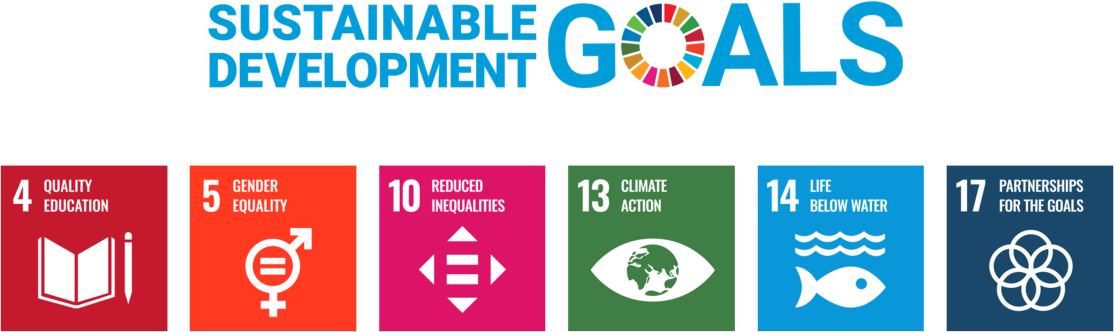
Through its comprehensive set of set of tasks designed within the frameworks of SDGs 4 [inclusive education], 5 [gender equality], 13 [climate action], 14 [life below water], 10 [equality] and 17 [global partnership], SAMOS will be highly transformative for South Africa and beyond, paving the way for new collaborative degrees and reinforcing employability.

Sustainable Blue Economy in South Africa
The South African Master in Ocean Sciences (SAMOS) is a transformative initiative designed to modernise and elevate Ocean Sciences education in South Africa.
Its core objectives include enhancing the quality of postgraduate training, increasing graduate employability, and equipping the next generation of professionals to support the Sustainable Development Goals and drive the sustainable growth of the South African Blue Economy. SAMOS particularly focuses on strengthening the teaching and research capacities of Historically Disadvantaged Universities (HDUs) and aims to establish a new centre of excellence for Ocean Sciences in the Eastern Cape. It also fosters international collaboration by linking South African and European universities. The programme’s implementation is structured across seven focused work packages, covering project coordination, accreditation, integrated teaching, logistical planning, capacity building, long-term sustainability, and strategic communication.
The South African Master in Ocean Sciences (SAMOS) aims to:
- Strengthen and modernise the training offered in Ocean Sciences in South Africa
- Improves employability of graduates and train the next generation of professionals for the workplace to address Sustainable Development Goals and the sustainable growth of the South African Blue Economy
- Enhance the quality of higher education in Ocean Sciences in South Africa
- Strengthen the postgraduate teaching and research capacities of HDUs
- Develop a new pole of Ocean Sciences in the Eastern Cape in South Africa
- Strengthen links and networking among South African and European universities and institutions, enhancing global capabilities in sustainability

- WP1 – Erasmus+ project management and coordination
- WP2 – Governance and accreditation of the SAMOS degree programme
- WP3 – Integrated teaching activities for the SAMOS degree programme
- WP4 – Logistical implementation of the SAMOS degree programme
- WP5 – Capacity building activities for SA partners
- WP6 – Sustainability
- WP7 – Communication & dissemination